For decades, witnessing the Great Wildebeest Migration required a little luck, a knowledgeable guide, and excellent timing. Travellers would book safaris months in advance, hoping the herds would arrive where they were expected to be. But nature rarely works on a fixed schedule.
Today, technology is changing that.
Thanks to migration tracking apps and live sighting platforms, travellers can now follow the movement of herds in near real time, making it easier to plan a safari around one of the world’s greatest wildlife spectacles. Whether you are dreaming of dramatic Mara River crossings, the calving season in Ndutu, or quiet moments deep in the Serengeti plains, these digital tools are becoming surprisingly useful travel companions.
The Great Migration involves more than 1.2 million wildebeest, alongside zebras and gazelles, moving across the Serengeti-Mara ecosystem in Tanzania and Kenya in search of fresh grazing driven largely by rainfall patterns. Because the movement depends heavily on weather conditions, the migration can shift earlier, later, or unexpectedly each year.
That unpredictability is exactly why migration tracking platforms are gaining popularity among safari travellers.
HerdTracker

One of the most well-known tools is HerdTracker by Discover Africa, a web-based platform that allows travellers to monitor migration movements through live updates and interactive maps.
The platform gathers information from safari guides, rangers, pilots, lodges, and travellers on the ground to provide regular sighting updates. Users can view where herds were recently spotted and even see nearby lodges and camps, helping travellers decide where to stay for the best chance of sightings.
What makes HerdTracker particularly useful is its monthly prediction feature. Since many safari bookings are made far in advance, travellers can use historical migration patterns combined with current sightings to identify which regions of the Serengeti or Maasai Mara may offer the best viewing opportunities during their travel dates.
For first-time safari-goers, this can help answer the question everyone asks: “Where exactly will the migration be when I visit?”
Wildebeest Sightings
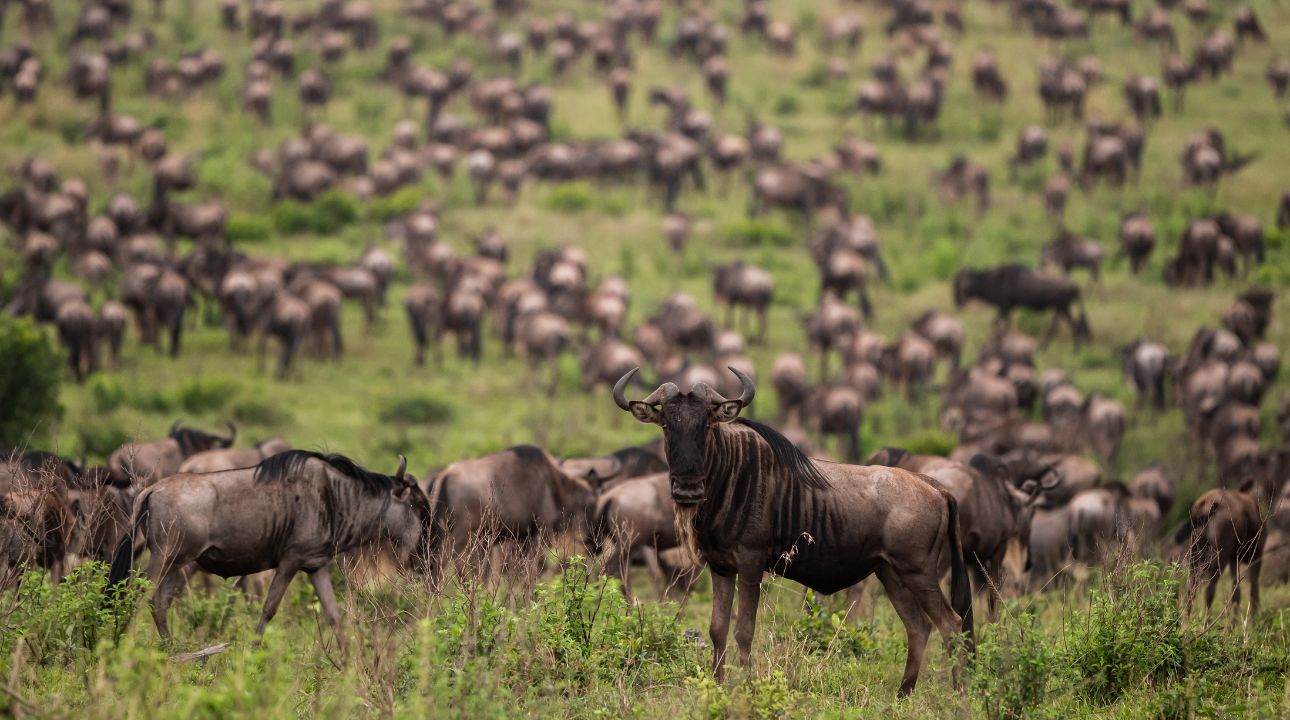
Another increasingly popular platform is Wildebeest Sightings, which provides detailed migration updates throughout the year.
The platform shares recent sightings, estimated herd locations, movement patterns, and migration maps covering both Tanzania’s Serengeti and Kenya’s Maasai Mara. Recent updates even include specific areas where the herd was last spotted, such as the Namiri Plains or the Central Serengeti, alongside dates and notes about herd behaviour.
In many ways, it feels like crowd-sourced safari intelligence.
For travellers, especially photographers or wildlife enthusiasts, this level of detail can be incredibly valuable. Instead of relying solely on general migration calendars, travellers can make more informed decisions about routes, accommodation, or whether to prioritise the southern Serengeti during calving season or the northern Serengeti during river crossing season.
The Serengeti Tracker
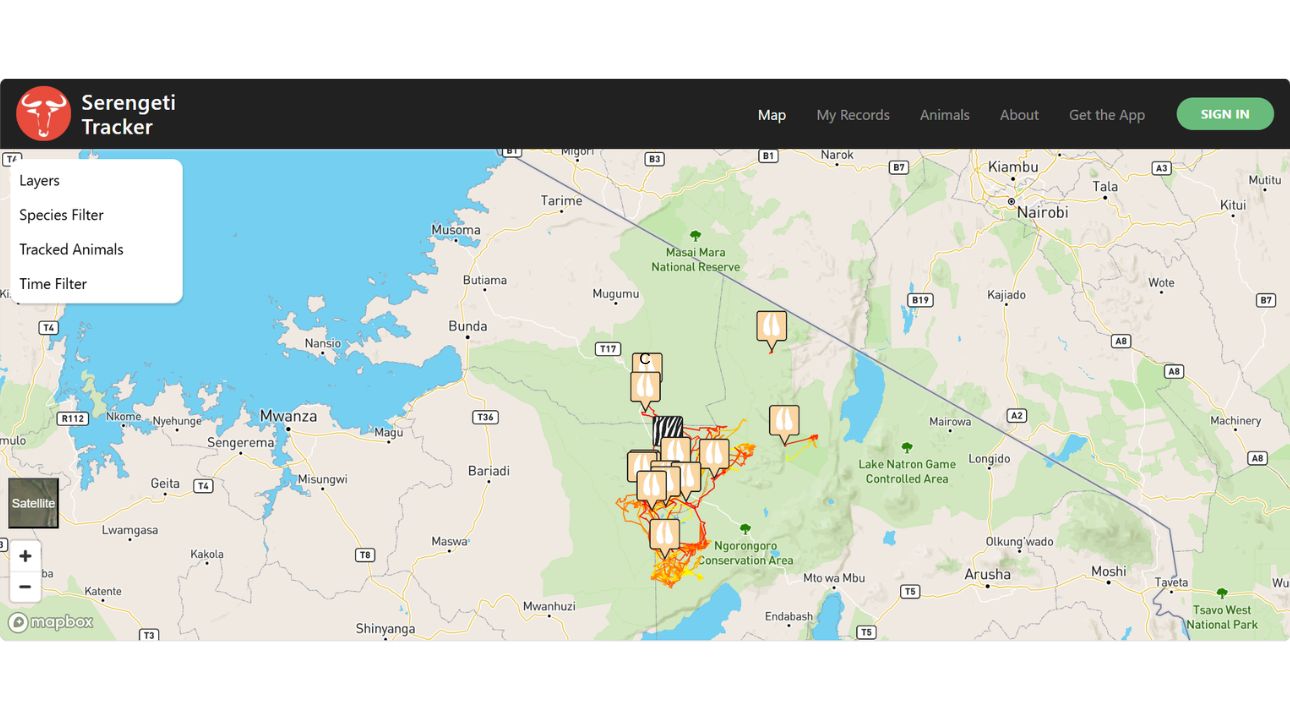
Apps like the Serengeti Tracker are also contributing to a wider shift towards smarter safari planning. Travellers today are researching destinations more deeply, monitoring wildlife activity before arrival, and increasingly seeking flexible itineraries that can adapt to real-time conditions.
This is particularly important because migration is not a single event happening on a fixed date. It is a year-round cycle influenced by rainfall, grass quality, and survival instincts. Experts and safari guides, increasingly emphasise that travellers should think less about the "migration season” and more about migration movements.
Technology cannot guarantee a perfect river crossing or a front-row wildlife encounter. Nature still decides that. But these tools significantly improve travellers’ chances of being in the right place at the right time.
Why This Matters for Safari Travellers
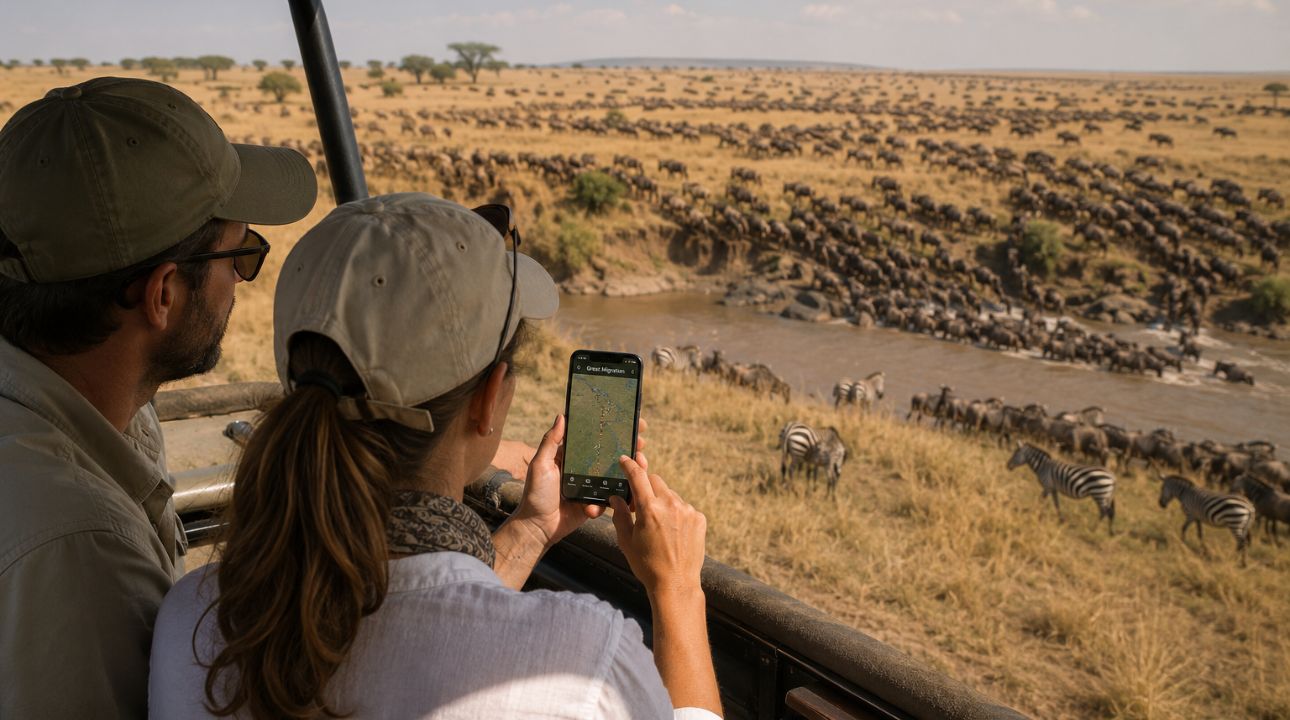
For safari travellers, especially those investing heavily in a bucket-list African safari, these apps offer something incredibly valuable: confidence.
They help travellers plan smarter, choose the right regions, understand seasonal wildlife behaviour, and manage expectations. They also make the safari experience feel more interactive long before the journey even begins.
Something is exciting about opening an app from thousands of kilometres away and seeing that herds have reached the northern Serengeti or are gathering near the Mara River. Suddenly, the migration stops feeling like a distant documentary and starts feeling real.
And perhaps that is the beauty of these platforms. They bring travellers closer to one of nature’s greatest spectacles even before the safari vehicle engine starts.